Non-Destructive Entry Explained: Opening a Door Without Damage
Non-destructive entry opens a locked door without breaking the lock. Learn how it works, when it is not possible, and why drilling is sometimes the last step.
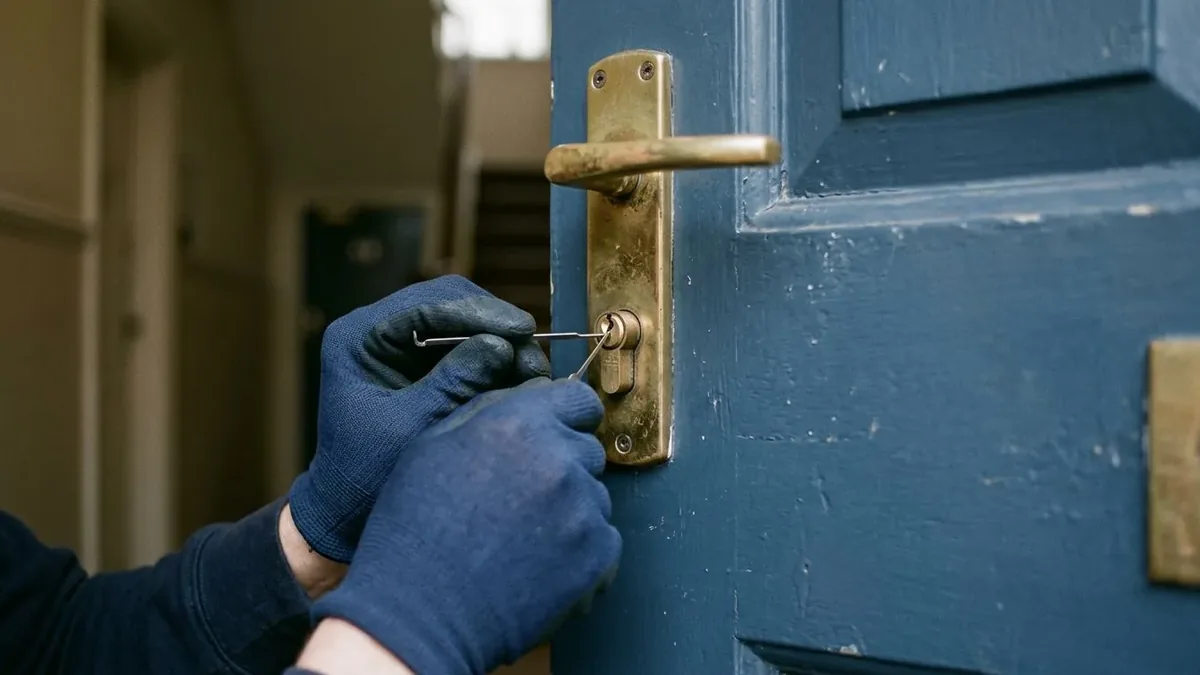
When you are locked out, one question matters most: will my door survive? Non-destructive entry is the answer that most people hope for. It means the locksmith opens the door and leaves both the lock and the frame in working order.
This post explains the idea in plain terms and where it works well. It also covers where it does not, and why drilling is sometimes the honest last step.
What non-destructive entry means
Non-destructive entry is any method that gets you inside without breaking the lock or the door. The lock keeps working afterwards, so you do not always need a replacement. For you, that usually means less mess, since nothing needs a repair.
It is also the right first approach for a professional. A trained locksmith looks at the door and the lock before choosing a method. If a gentle method can work, they try it first, because it costs you less in damage.
We keep the detail at a high level on purpose, because a step-by-step guide would help the wrong people more than the right ones. The skills behind this take training and practice.
Common methods, in general terms
Locks fail in different ways, so locksmiths use different approaches. These are the main groups.
- Slipping a latch. If a door is only pulled shut, the latch may sit loose in its keep. A thin tool can sometimes move it without touching the lock itself.
- Reaching the handle or thumb-turn. On some doors a tool can reach a handle or turn from outside, for example through a gap or letterbox. Whether this works depends on the door and the way it hangs.
- Picking. A skilled person can work the inner parts of some locks without the original key. It takes time and care, and it suits some locks better than others.
- Using a gap in the door. Some doors have small gaps that let a locksmith reach the bolt or latch. A snug fit leaves less room for this.
None of these work on every door. Therefore a good locksmith treats each one as an option to try, not a promise.
Which doors are easier to open without damage?
The easiest case is a door that someone only pulled shut. The latch holds the door, but the key never locked the bolt. Many flat doors fall in this group, since people often close them behind them in a hurry.
Night latches are another common case. Some are easier to open without damage than others, depending on their age, their fit and how the door sits.
A door that someone locked with a key is harder. Because the bolt is thrown, the locksmith has to deal with the lock itself. In that case picking or other careful work may still help, although the result is not certain.
Why some locks resist it
Better locks are harder to open without the key, and that is the point of them. This is good news for your security, although it can make a lock-out harder to fix.
In the UK, British Standards describe thief-resistant locks. According to Secured by Design, BS 3621 is the minimum standard for locks on external or entrance doors. It covers locks where you can use a key to get out from inside. BS 8621 covers a similar lock that has a thumb-turn on the inside instead.
There is also a standard for replacement cylinders. Secured by Design lists DHF TS 007 as covering replacement cylinders and related hardware. Our guide to anti-snap cylinder ratings and our page on BS 3621 locks explain what these mean day to day.
For you, the lesson is simple. A strong lock should also resist skilled attempts, so a lock-out on a high-security door may take longer. In some cases, therefore, it will not open without damage at all.
When drilling is the last resort
Drilling destroys the lock, so a professional avoids it unless nothing else works. It tends to come up in a few situations.
- The lock is high security and resists other methods.
- A key has snapped or jammed inside the lock.
- The lock has no way in for a gentle tool, for example a deadlock with no gap to reach.
- The lock has already failed inside and will not turn.
If drilling is needed, a fair locksmith explains it before they start. After the door opens, you will need a new lock, so ask what the options are. Our lock change page lists what we can fit, while our locksmith prices guide covers costs.
Questions to ask before work starts
You do not need to be an expert to ask good questions. These help you spot an honest locksmith.
- What method will you try first?
- Is there a chance you will need to drill, and when would you decide?
- If you drill, what will it cost to replace the lock?
- Will you agree the price with me before you begin?
Our guide on how to check a locksmith has more on this. Since honest answers are easy to give, a locksmith who will not give them deserves a second thought.
Related services and local cover
Non-destructive entry is a core part of our emergency locksmith work. The same care applies to a locked safe, although safes have their own methods and limits.
We cover W2 and the streets around it as a mobile service. You can read about our mobile locksmith in Marble Arch cover and our Kensington locksmith cover, since both areas sit close to Bayswater.
If you are still outside, our post on what to do first when locked out of your flat gives a calm checklist. Mansion blocks also have shared doors, which we explain in communal door locks in mansion blocks.
To ask about your door, send the details through our enquiry form. Tell us the door type, the lock and what happened.