Can You Fit a Smart Lock to a Period Front Door?
Can a smart lock go on a Victorian or Edwardian front door? Often yes, if you plan it well. Here is what to check before you buy, from fit to insurance.
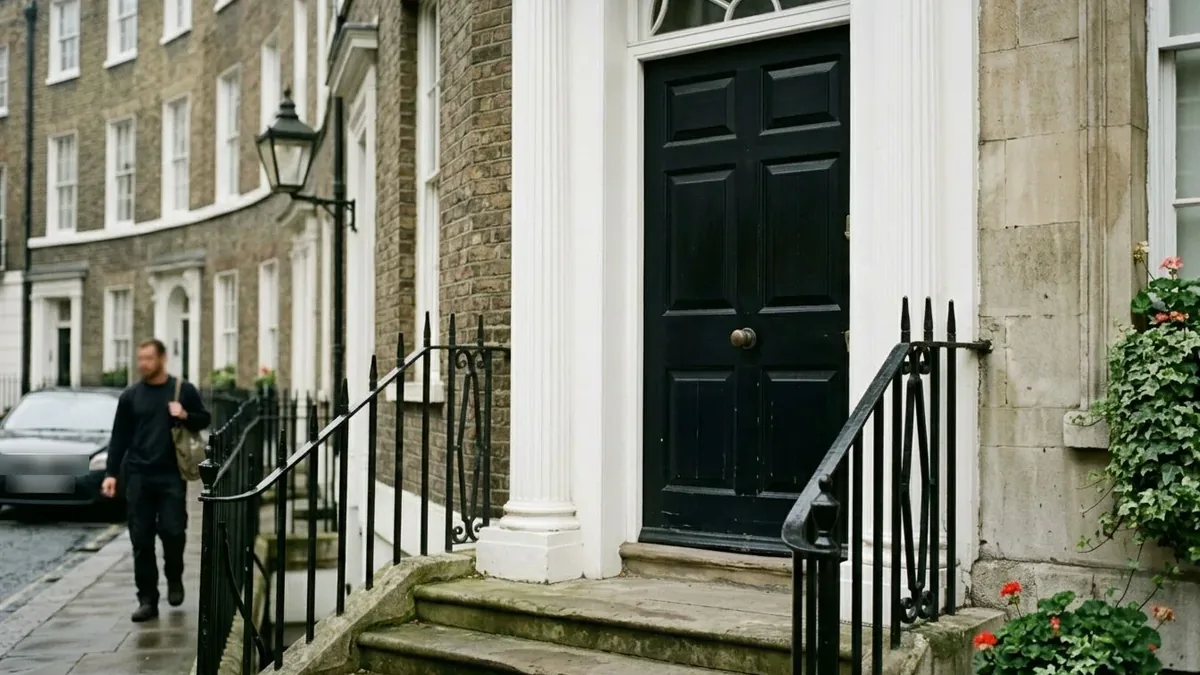
A Victorian or Edwardian front door is built to last, but not for a modern smart lock. The timber may be thick in places and thin in others, since panels and rails differ. It may also carry a night latch and a mortice deadlock already.
So the honest answer to the question is yes, often. However, the right way depends on the door, the lock already in it and your insurance. Here is what to look at before you buy.
What a period door gives you to work with
Many period doors in Notting Hill and Kensington are timber panelled doors with a night latch and a mortice lock. The panels, rails and stiles each have a different thickness. A lock made for a flat modern slab can sit badly on a door like this, and it may look wrong too.
For that reason we check three things first:
- how deep the timber is where the lock would go
- which locks the door already holds, and where
- what state the old mortices and strike plates are in
Cutting a new hole in old timber weakens it. Therefore a good fit often uses the holes already there, while new cuts stay small. Our smart lock installation service starts with this check.
Retrofit or replace
There are two main routes, and each has a trade-off. A retrofit adds smart features to your existing lock. A replacement swaps the lock for a new smart model.
A retrofit keeps the look of the door. For example, a smart cylinder or a small unit on the inside can work with your current lock. Because the outside stays the same, the door still looks original.
A replacement can suit you when the old lock is worn or missing parts. In contrast to a retrofit, it needs more work on the timber. If the lock is worn, our guide to lock repair or replacement helps you choose.
Keep the lock your insurer may ask for
Some home policies name a lock standard for external doors. Secured by Design describes BS 3621 as the minimum standard for locks on external or entrance doors. It is a thief-resistant standard with key operation from both sides.
Check the rating on any smart lock you like, because it is the lock body that carries the standard. Many owners keep a BS 3621 mortice on the door for that reason. The smart lock then adds daily convenience, while the mortice does the heavy security work. Our BS 3621 locks page explains the fitting.
Secured by Design also lists TS 621 for thief-resistant electronic door locks. Sold Secure runs SS 504, which has two grades, Diamond and Gold. Ask any seller which of these a model has passed. Then ask to see the certificate, since a claim alone proves nothing.
If your door has a euro cylinder, see our guide to how anti-snap cylinder ratings work. The same care applies there.
Backup, batteries and getting out
Every smart lock needs a plan for the day it fails. Look for at least one of the options below, because batteries and apps do fail.
- a mechanical key override
- a way to power the lock from outside
- a second entry method, such as a code and a fob
Getting out matters as much as getting in. Secured by Design notes that BS 8621 locks use key operation outside and a thumb turn inside. It also says BS 10621 locks must only go on homes with another way out. Check this before you choose a lock for a flat.
Leases, listing and conservation areas
A flat in a period house has its own rules. Your lease says who may change the front door, so read it before you change a lock. Mansion blocks add other limits. Our guide to mansion block communal door locks covers who controls what.
Listed buildings are different. Section 7 of the Planning (Listed Buildings and Conservation Areas) Act 1990 bars works that would affect a listed building’s character unless authorised. Section 9 sets the penalties, which include a fine and up to two years in prison on indictment.
A conservation area adds its own checks, so ask your council. Our Notting Hill and Portobello Road locksmith cover and our Kensington locksmith cover both include period homes. For a wider look at older homes, read our period property security guide.
Rented flats and tenant changes
If you let a flat, a smart lock can help with keys. You can change a code instead of a lock when a tenant leaves. Our guide to locks at an HMO tenant changeover covers the rules that apply to shared homes.
Even so, think about escape. As noted above, some lock types need another way out of the home. Check this before you fit anything in a let property.
Before you buy
Write down your door type, your current locks and what your insurer asks for. Note any lease or listing limits. Then compare models on proof of testing, not on looks alone. As a result you avoid buying a lock that the door cannot take.
For fees, see our locksmith prices page. It is the one place where we set out our costs, so you can compare before you ask us anything.
Send us your door details
Tell us what the door looks like, what locks it holds and what you want the smart lock to do. A few photos help, although they are not required. Send it all through our enquiry form and we will say what suits your door.